
Dosage calculated per project
Loads, slab thickness, exposure class and pour method decide the kg/m³ — typically 1–10, and 2–4 for ground slabs and sprayed concrete.
 PolyProFiber
UKS ISO 9001 · ASTM C-1116 · 25+ years
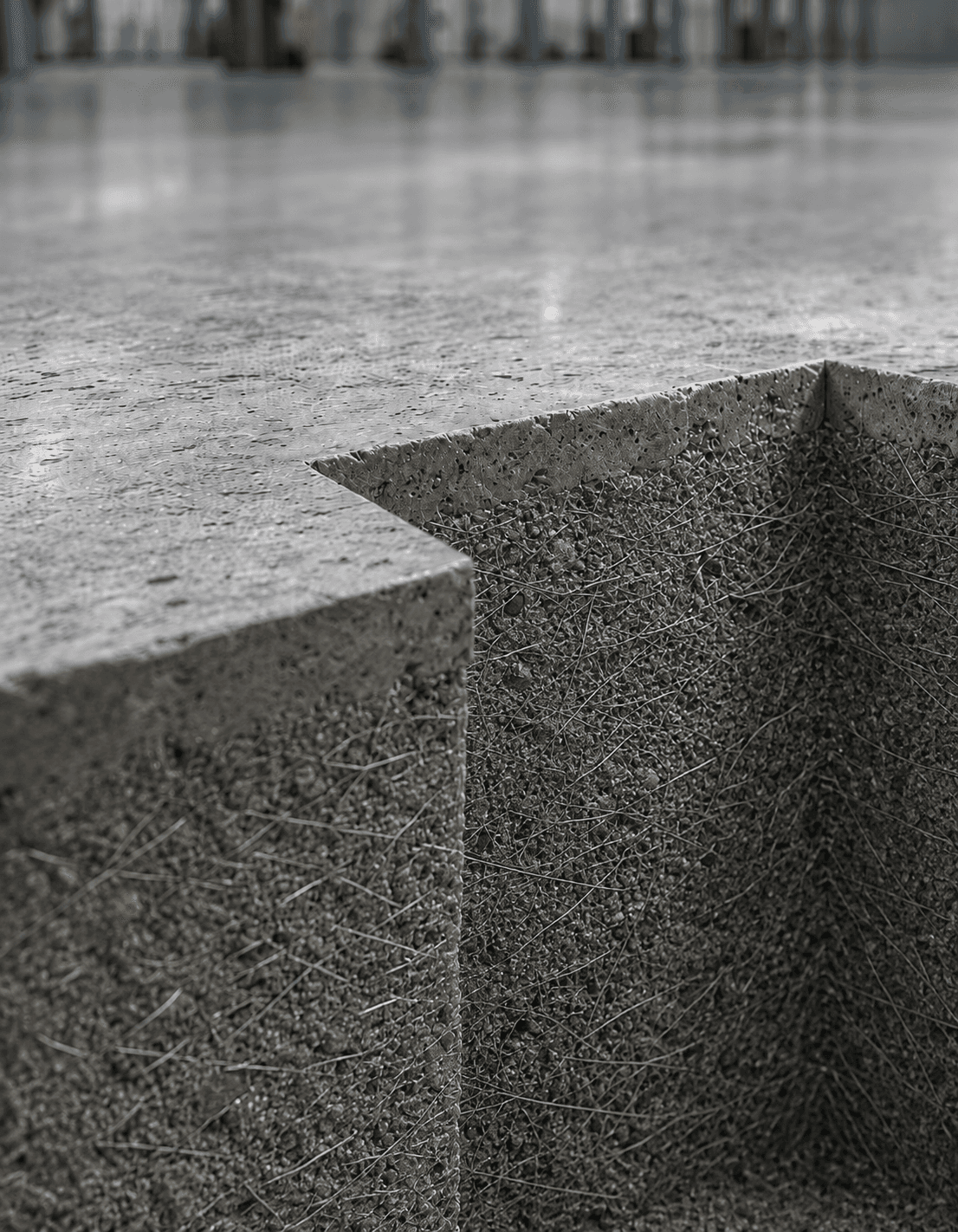
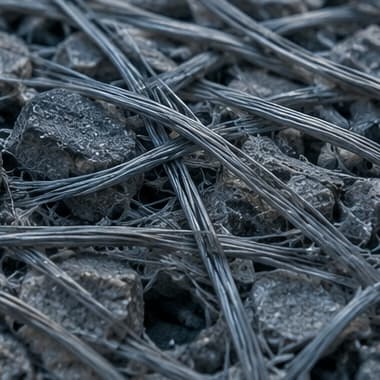
220,000
fibres / kg · 54 mm
Macro and micro synthetic fibre reinforcement — three-dimensional reinforcement that replaces steel mesh, at an engineered dosage. Never a figure copied from a catalogue.
By the numbers
Experience
25+
Years in the field
Delivered
8M
m² across Türkiye
Dispersion
220K
Fibres per kilogram
Speed
50%
Faster than steel mesh
What we supply
Six product lines, one engineering standard. Every dosage is calculated from your loads, slab thickness, exposure class and pour method — never copied from a catalogue.
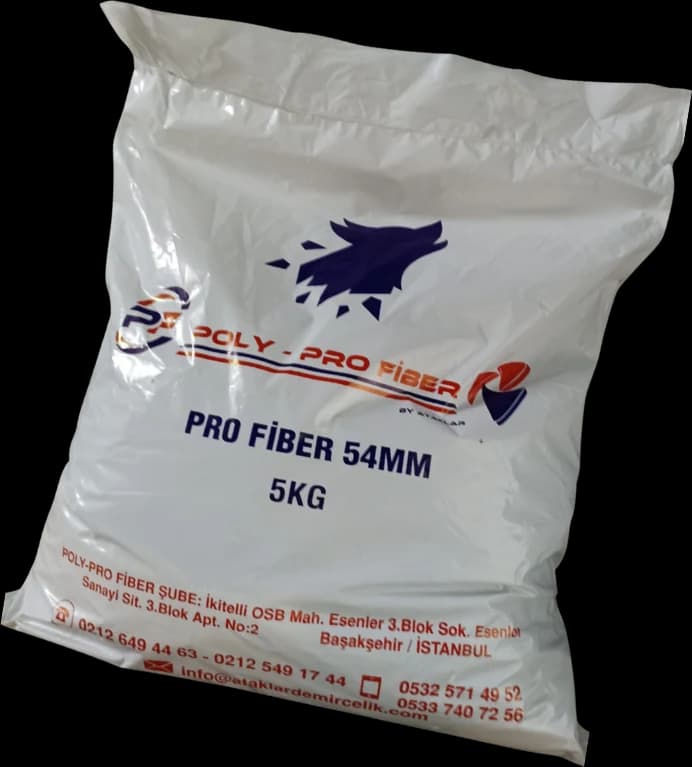
REQUEST DETAILS54 mm single-filament copolymer fibre — 220,000 fibres per kilogram, 550–750 MPa tensile strength, to ASTM C-1116.
12 mm hard glass fibre that controls plastic shrinkage cracking, adds heat resistance and keeps decorative surfaces intact.
Hooked-end C1008 wire to TS 10513 — 1,100 N/mm², twice the strength of mesh, dispersed homogeneously through the pour.
Diamond grinding, chemical hardening and multi-stage polishing that turn an existing slab into a dust-free finished floor.
Aluminium, PVC, stainless and epoxy-filled profiles that absorb expansion and contraction movement before it becomes a crack.
Turnkey floor packages for plants, warehouses and cold stores — dosage design, pouring, trowelling, curing and joint cutting.
Fibre vs mesh
Where macro fibre and steel mesh actually differ on site — not on paper.
Why PolyProFiber
Most slab cracking is a dosage problem, not a material problem. Our engineers start with your loads and your pour programme, not with a product sheet.
SEE OUR PROCESSLoads, slab thickness, exposure class and pour method decide the kg/m³ — typically 1–10, and 2–4 for ground slabs and sprayed concrete.

We do not only supply the fibre. Our own crews have been pouring, trowelling and polishing industrial floors for over 25 years.
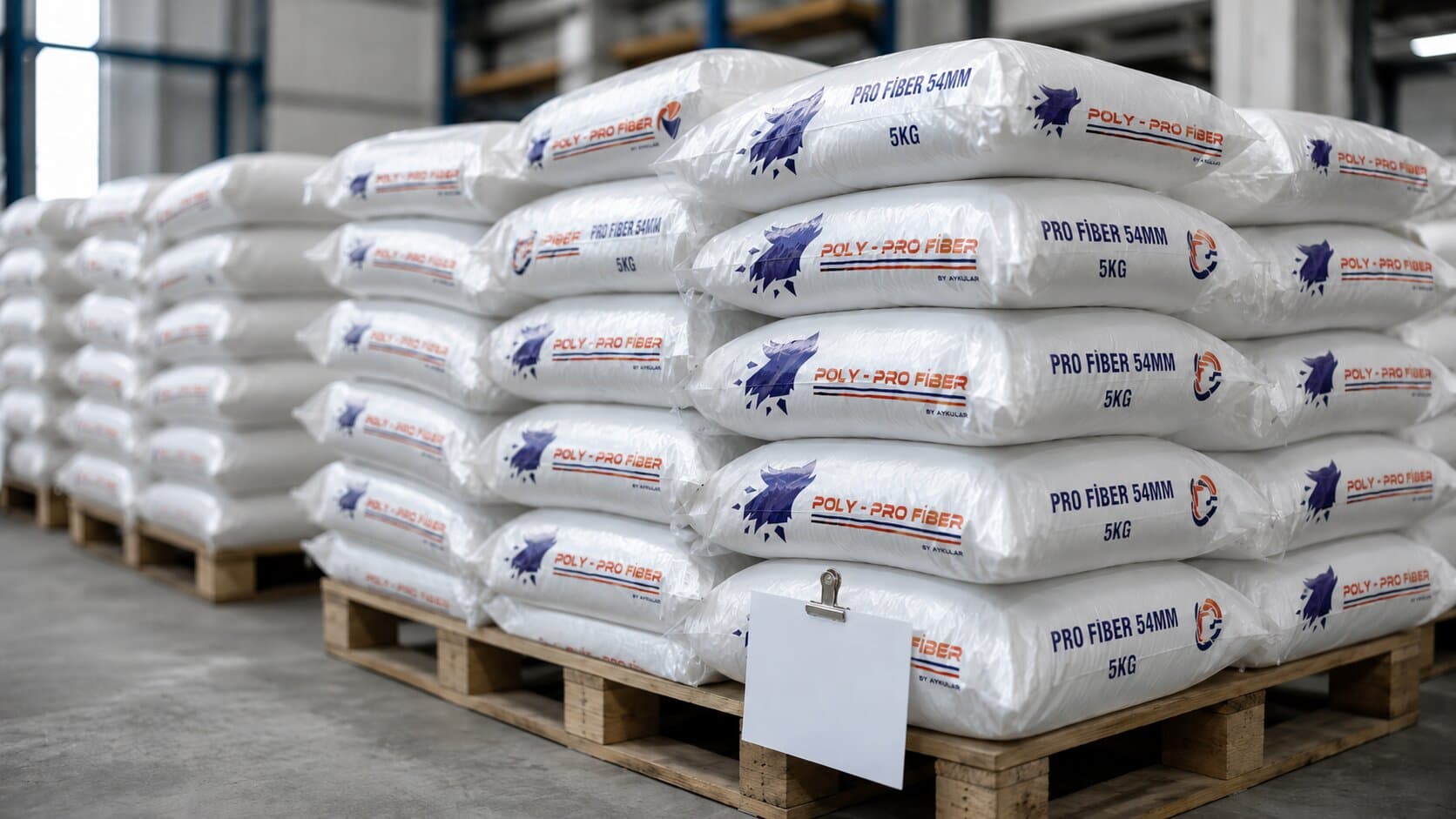
100% pure PP/PE copolymer to ASTM C-1116, under UKS ISO 9001 quality management, with batch-level performance certificates.

Dosage records, batch certificates, surface hardness and flatness readings — recorded and handed over as a project dossier.
Trusted on the floors of






















How it is applied
The same documented process runs on a 200 m² workshop floor and a 65,000 m² plant — from the first project review to the handover of the records.
2–4
kg/m³ typical dosage
24h
Proposal response
Loads, slab thickness, exposure class and pour programme reviewed with your engineer, free of charge.
Fibre type and kg/m³ fixed in writing, with the supporting standard and test data.
Fibre mixed to homogeneous dispersion, then screed levelling, power trowelling and surface hardener.
Controlled curing, joint cutting one to three days after the pour, and handover of the records.
Client feedback
“Cracking was minimised and the finished surface came out cleaner than we expected. The aesthetic result convinced the client straight away.”
“Application was noticeably easier than mesh. We saved time on site, and the cost difference showed up directly in the programme.”
“In marine and infrastructure work the performance has been superior — no corrosion to worry about, and far better behaviour under impact.”
FAQ
The questions our engineers are asked on almost every first project call.
See all questionsFor ground slabs, industrial floors and car parks, yes. Its three-dimensional distribution behaves more homogeneously than the two-dimensional reinforcement a mesh provides, and it controls edge and corner cracking too. For structural elements needing a static calculation, your project engineer’s approval remains essential.
Between 1 and 10 kg/m³ depending on the application. For ground slabs and sprayed concrete the common range is 2–4 kg/m³. We calculate the exact figure from your loads, slab thickness and exposure class, and state it in writing.
No. The 100% polypropylene copolymer structure gives complete immunity to corrosion and water absorption is zero — which is why it outperforms steel mesh in coastal structures, water projects and waste-water applications.
Macro fibre complies with ASTM C-1116 and the steel wire reinforcement with TS 10513. Quality management is certified to UKS ISO 9001, and performance consistency certificates are supplied with each batch.